
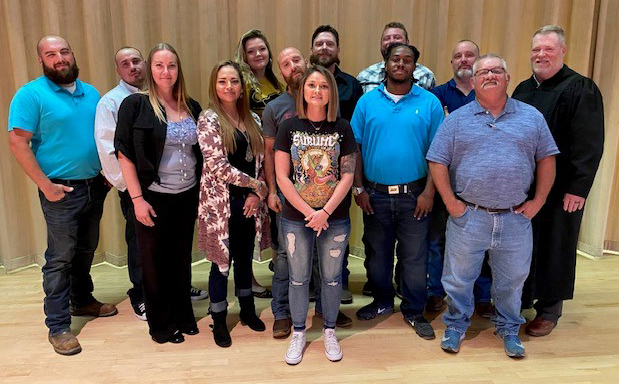
Described as a blending of substance abuse treatment and the judicial system by Associate District Judge Christopher Kelly, the Washita-Custer County Treatment Court Program held its latest graduation commencement earlier this month.
Most recently, the treatment court program has produced 12 graduates who have gone through the pro gram’s five-phase process.
“It’s awesome,” court coordinator Tracy Burton said. “It just shows that the program works, and that’s kind of the drug court motto. It works. It really does.”
Participants of the program spend 18 to 22 months progressing through the five phases, and throughout that time they will attend individual programs such as Alcoholics Anonymous, take classes to get their GED, and a Love and Logic parenting program.
“When they go to prison, there is no treatment. There’s not a lot of programs for them,” Burton said. “There’s a lot of things that they’re required to do [in treatment court] that they wouldn’t otherwise have.”
While the treatment court team members all believe that the program works, the results speak for themselves such as when graduates read their letters in front of the court during their graduation.
One participant recounted their time first joining the program thinking that it would be an easy accomplishment before realizing it would be harder than they had initially thought.
For the sake of their privacy, we have chosen to keep the participants anonymous.
“I remember coming into this program thinking I had it. That was a mistake,” they said in their letter presented to the court during graduation. “What I didn’t know, it was also going to be the best decision I made in my life.”
This message was repeated a few times throughout the participants’ letters from the day of the graduation. Many believed they could go through the program easily before they “quickly learned after some time the amount of commitment it was going to take to get to the end,” one other participant wrote.
Although they faced struggles and difficulties as they progressed through the program, many participants shared a similar sentiment throughout their letters.
“It is worth it.” While participants discuss their past and what they went through, many are also eager to talk about the accomplishments that
“It is worth it.” they have achieved because of the program.
“I have accomplished more in the last two years than I did in the first 29 years of my life,” wrote this participant. “A great career, stable finances, and a happy and healthy home life were just dreams I had. Now it’s my life every day.”
“One of the best feelings in the world to me is hearing people tell me that they are proud of me.” another wrote. “That has given me the confidence to know that I can accomplish anything.”
Many also realize that as they continue their journey of sobriety, they will still face some struggles in their day-to-day life, but they now have a better way and a reason to handle those struggles.
“I was always searching for some justification for my actions,” another participant wrote. “Today I realize it’s ok to mess up and that I’ll never be perfect but to not be come weak and turn to substance… I have goals today, and I have treatment court to thank.”
Ultimately, while the participants work hard to get to where they are today, many, if not all, thank the entire drug court team for being there for them every step of the way.
“They believed in me even when I didn’t believe in myself, and for that, this drug court team has my utmost respect,” wrote one participant after discussing his time in the program and discussing that he was close to being terminated from the program a few times. “You all are the real heroes for standing by us when no one else does. That means a lot.”
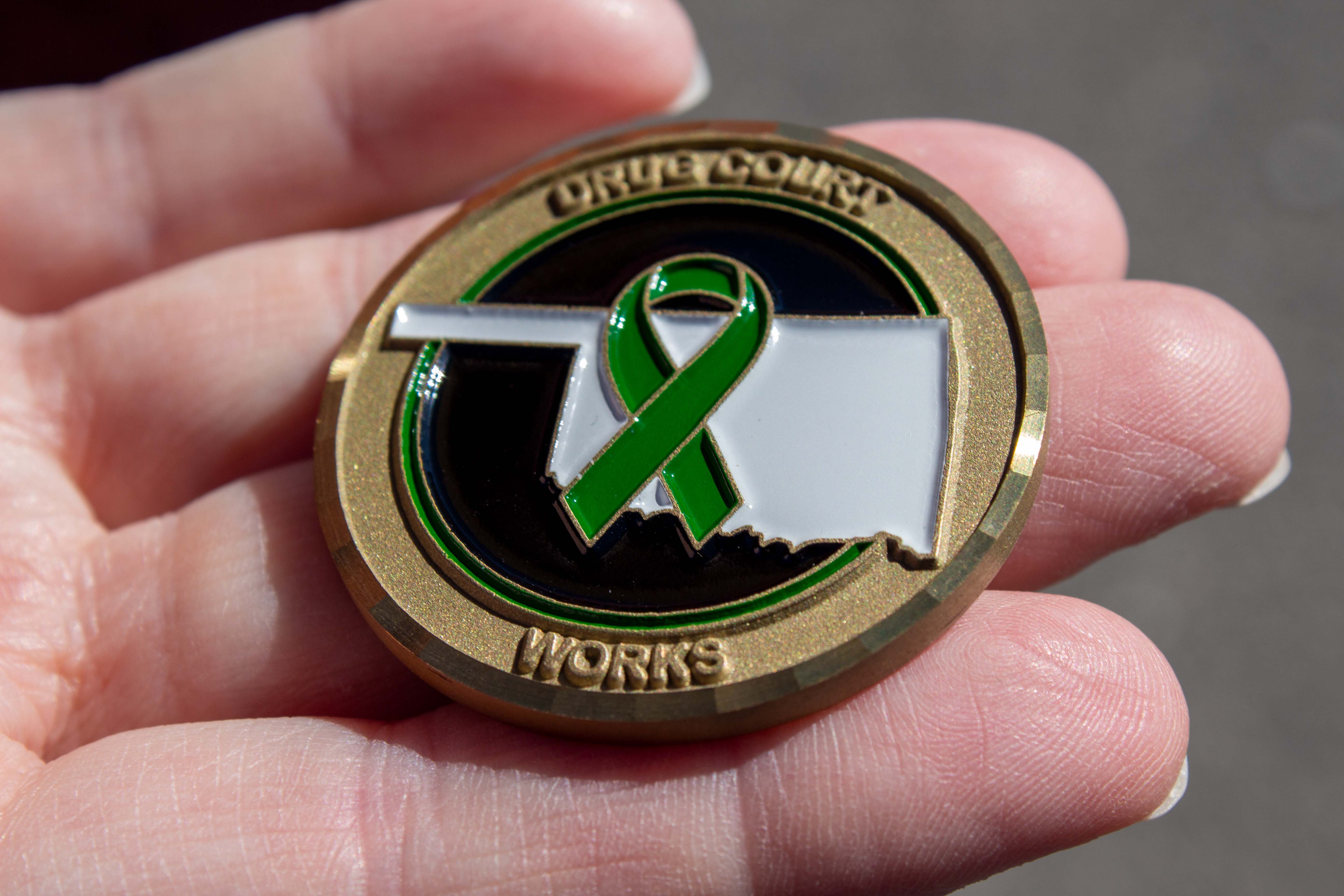
Upon graduating from the program, participants are given a coin created by Judge Kelly in 2007 that he said commemorates their achievement of graduation.
“The design of the coin represents two different aspects of the Washita-Custer County Treatment Court. On one side, the international symbol for drug courts, the gavel surrounded by snakes in the form of the symbol also known as the Caduceus. This represents the union of treatment and the court system,” Kelly said. “On the other side is an outline of the state of Oklahoma in white with a green ribbon in the center. The green ribbon symbolizes Judge Ellis Cabaniss who was the Associate District Judge in Washita County who started this drug court.”

Although the program’s latest graduation is done and out of the way, some current participants get ready for their chance to graduate as Burton said that several participants requested to graduate in January during the most recent graduation.
Most recently, participants continued to work on their recovery as they picked up litter along Highway 183 near the county line of Washita and Custer county.
“We have adopted these two miles, that’s a mile into Washita and a mile into Custer because we cover both counties, we adopted these two miles just for the beautification of Oklahoma. When we don’t have court, these are the kinds of things we come out and do. We do a cleanup project in the community somewhere,” Burton said.
Through the entire program, new, current, and previous participants potentially face struggles in sticking with it, however, throughout their letters many participants praise the help of the treatment court team as well as the ability of the court’s current members to be able to stick with the program while also encouraging them.
“You graduate and still have a choice. You can go back where you came from, or you can choose to use the countless tools that got you where you are today,” wrote one participant.