
A life-changing experience.
That is how some members of the Washita-Custer County Treatment Court Program described their time in the program thus far during one of its court sessions this month.
But what is the Washita-Custer County Treatment Court Program?
Associate District Judge Christopher Kelly describes it as a blending of substance abuse treatment and the judicial system.
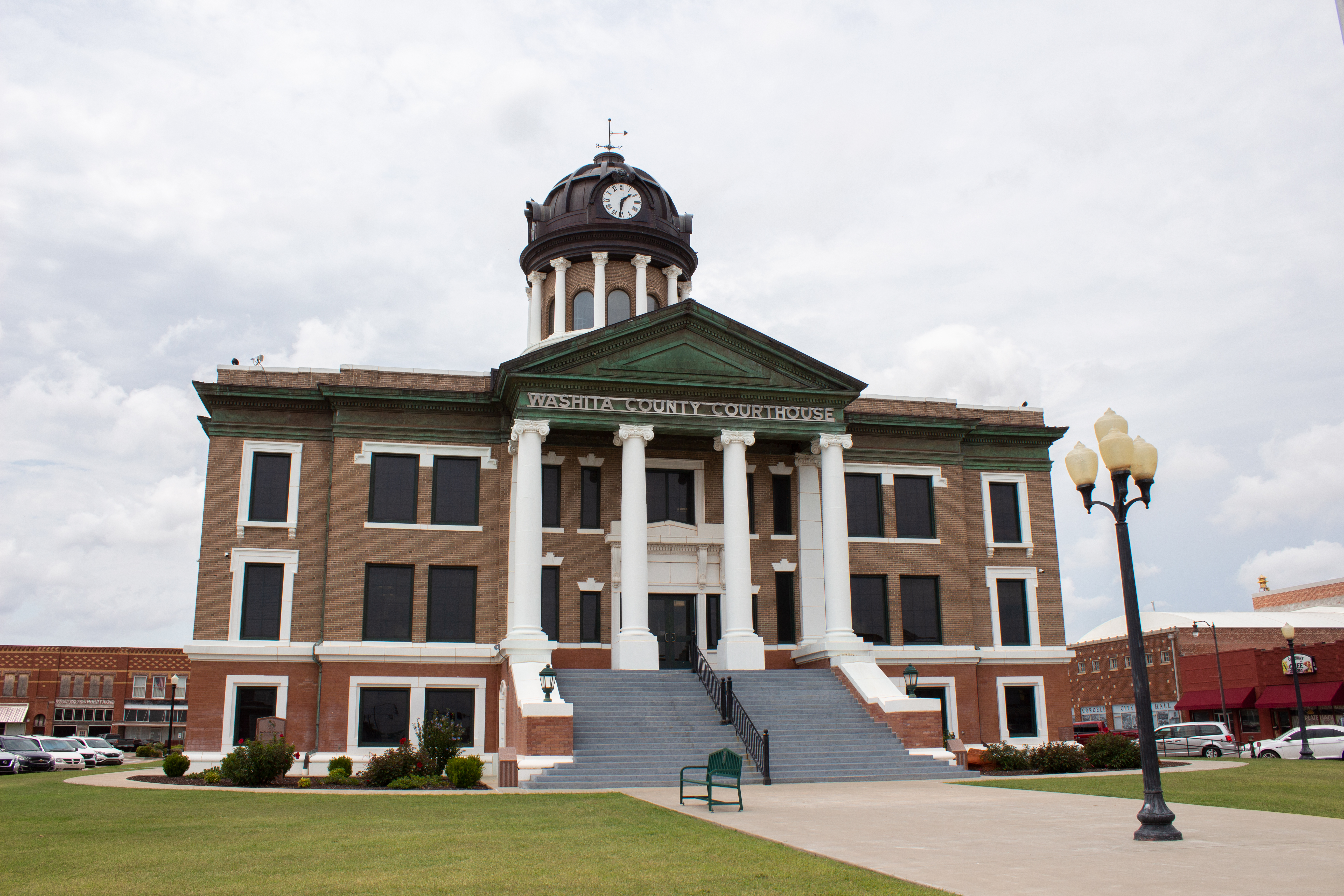
Started in 2005, former Washita County District Judge Ellis Cabaniss with the help of Kelly sought to create a drug court program in the county by partnering with Custer County to make it a possibility.
Non-violent felony defendants request to be a participant where they then go through a highly-structured program that includes substance abuse and/or mental health treatment, regular court appearances, self-help recoveries, and court supervisions.
The Treatment Court consists of three separate treatment courts dealing with felony drug offenders, felony DUI offenders, and felony drug offenders who have mental health problems.
The program had initially begun with just the Adult Drug Court program, but Kelly has expanded it to include the Co-Occurring Mental Health Court in 2015 and the DUI Court in 2018.
As part of the participants’ recovery, the court looks for ways that participants can give back to their community. A move that Kelly describes as “essential for their recovery.”
Much of this recovery comes in the form of volunteer projects around the counties.
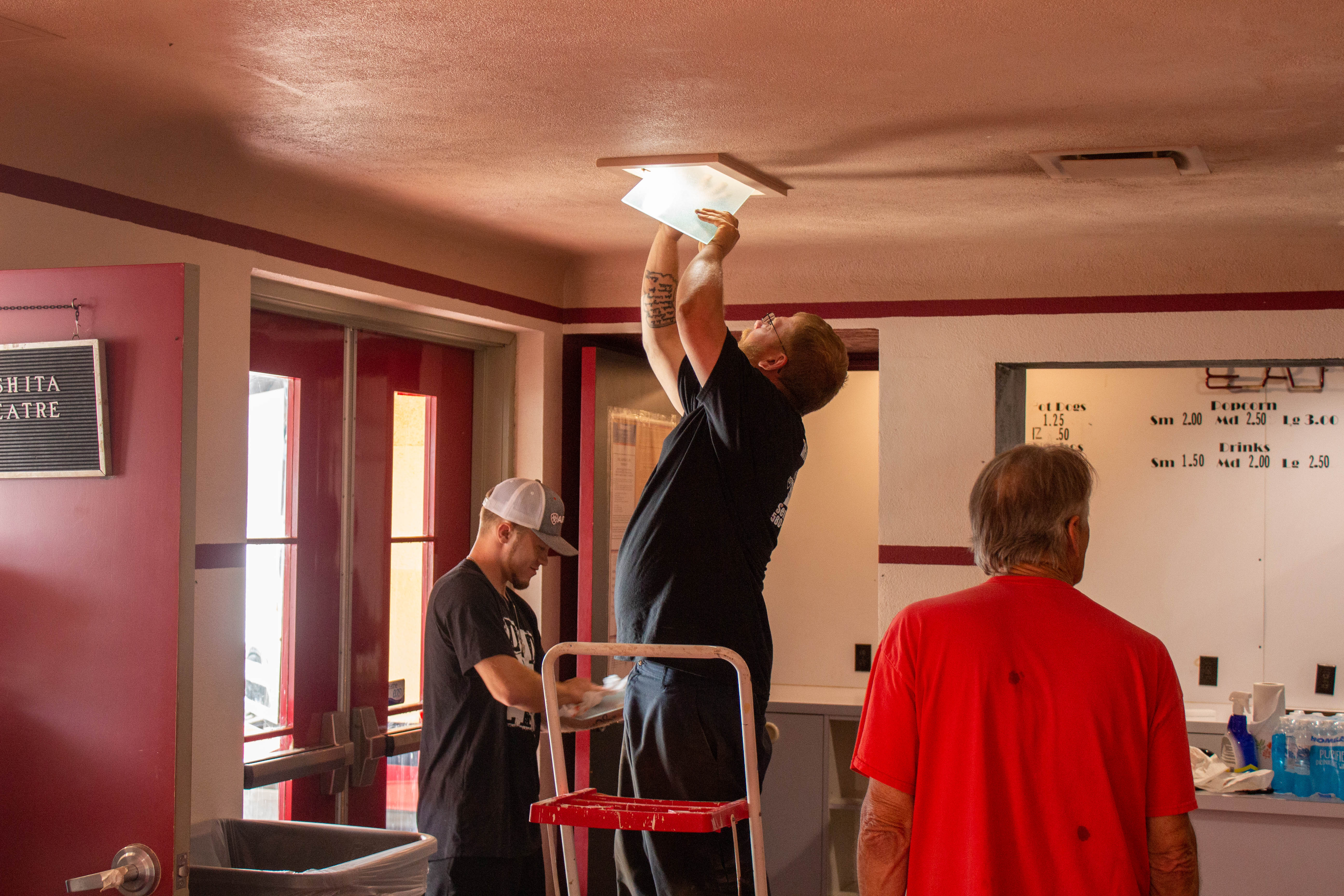
“Over the years, as a group, the participants have cleaned up parks and streets in Cordell, Clinton, and Weatherford,” Kelly said. “Participants individually or in small groups, have been involved in food drives, coat drives, smaller cleanup and repair/construction projects at churches, nursing homes, schools, and other non-profit organizations including smaller cities and towns in Custer and Washita counties.”
Other projects include clean-ups in Clinton, Weatherford, and Cordell which have been based on requests by various organizations, communities, and individuals. Most recently, participants spread mulch at the Lions Club playground in Cordell, picked up trash at Foss Lake State Park, cleaned up the fishing hole area at Rader Park in Weatherford, and cleaned the Custer County Fairgrounds.
Kelly himself holds the court’s participants in high regard, as he recounts a story that took place in 2012 during the construction of Lee Park in Cordell.
“Every participant in the treatment court volunteered to help at least eight hours during that time. On one day, a group of inmates from [the Department of Corrections] work release program also worked,” Kelly said. “[A] local volunteer came up to me and said, ‘Judge, don’t you think you should get onto your drug court people, they aren’t doing anything?’ I responded [with], ‘those individuals are DOC inmates, not from my court.” I then challenged the person to look around at the forty or so volunteers who were working at that time and point out who they thought were drug court participants. He was unable to do so. The drug court participants looked and acted just like all the other community volunteers there that day.”
Participants must apply to the program themselves after which the treatment court team, Judge Kelly, court coordinator Tracy Burton, ADA Booke Gatlin, compliance officer Daniel Evans, treatment provider Kathy Collier, detention officer Ana Torres, jail administrator Erick Payne, and defense OIDS attorney Katy Sokolosky.
What is the experience like for participants, and does the program work?
As of now, the program has 48 members which meet weekly to discuss updates and possible needs of participants.
During the month’s meeting, members of the court’s different phases discussed recent life updates with the judge.
Family, sobriety, jobs, life, travel, and more were all discussed with a drug court team that truly seemed to care for each of its participants as evident by Kelly, who sat at his seat asking each of the participants questions regarding their life as well as details discussed previously at other sessions.
“Treatment Courts are the most efficient way to address the problems associated with substance abuse offenders and DUI offenders,” Kelly said. “The ‘marriage’ of the court system and substance abuse treatment allows the court to focus on the difficulties, both legally and medically, that arise due to substance use.”
Hearing participants discuss their stories is a testament to how the program, which holds one of the state’s highest graduation rates at about 88%, can be a success for those who join.
According to Kelly, many people who have graduated from the program have gone on to own businesses, work jobs, and become productive members of their communities.
“I take pride in helping the participants through the program. I say all the time that I am not there to push them or pull them but rather provide them with the path that leads them to a better (aka sober) life,” Kelly said. “Our entire team walks beside them on this journey and provides them with the skills they will need to deal with their addictions.”
One such success story comes from Washita-Custer County Treatment Court Program graduate Kimberly Haskell.
Haskell, who graduated from the program in January of 2017, joined in October of 2014 in what she said was her attempt to simply stay out of prison.
“I was an addict. Methamphetamine, IV drug user,” she said. “I did not go into the program to make any changes. I just said, `I’m gonna go into this program, I’m going to do what they ask of me, and I’m going to get back out and do my thing.’”
Despite her initial belief in the program, three days after her graduation Haskell began her journey to get her bachelor’s degree and now has her master’s degree as she works towards becoming a licensed professional counselor.
“I was in a really dark place whenever I signed up and went into drug court,” Haskell said. “I don’t even think I realized that I was making a change until after the change had started happening. If you were to ask me today how I feel about the drug court, the drug court saved my life.”
Now, Haskell gets to pursue her passion in dealing with counseling of those who suffer from substance abuse and suicidal ideation as both have had a major impact on her life.
“I want to help as many people as I possibly can who struggle with addiction or suicidal ideation because they go hand in hand,” Haskell said. “I just want to help other people that are like me, and I think I do. I have a lot of people come up to me and go, ‘Oh my gosh, you inspire me to do great things!’ One of the other girls that finished right behind me, she started school now, and she wants to go down the same career path that I went down.”
However, Haskell could not have made this change alone as she echoed the sentiment of feeling like the team members of the drug court cared for every one of its participants and catered to their needs in an individualistic manner.
“[The team] knows that what is good for me is not always good for the next person. They put in a lot of emotion and they’re very heartfelt… The people that are chosen to meet and to make decisions for the participants, they do care about each and every one of us,” Haskell said. “I try to touch base with [the team] occasionally just to give them hope. Give them hope that the program truly is working”
Haskell admits that she had a different sentiment about the team when she initially joined the program, but that her counselor helped her see differently.
“I always felt like the judges were really hard on me, and one day my counselor was with me and she said, ‘Do you ever think that they’re hard on you because they know what you’re capable of? They see the good in you,’” she said.
Looking back, Haskell thought of what she was able to get out of the program while she was in it as well as what she still retains today.
“I learned self-discipline and that was a game-changer for my self-esteem,” she said. “I had never achieved a lot in my life. I started college a couple of times but couldn’t finish that. Once I finished that program, I knew I could. Then, like I said, three days later, I enrolled in SWOSU and started classes, and I went through that process in phase five of getting everything in order. Here I am today, killing it with a 4.0 grade point average. I didn’t have that in the past. My mother was always a mother that said you can’t do that. I never had a lot of support. Drug court provides an enormous amount of social support for a person.”
As for advice, Haskell offered both advice on being able to finish the program due to financial reasons as well as advice for continuing to stay sober after graduation, something she has achieved for seven years now.
“I feel like a lot of the reason other people didn’t phase up was because they let their costs build up so high… Somebody in the program, when I first started said, ‘If you paid $40 a week every week, you will never get behind on any of your costs and you will always phase up,’” Haskell said. “[Also], change comes from within. And I will tell you if I can do it anyone can do it, but only if they just utilize the tools given to us that we need to be successful and have a good life… And although I’m seven years clean and sober, life is going to be life. You don’t just do the program and then everything’s rainbows and butterflies. You have to deal with things and situations that happen in life every day, and you have to make a choice to stay sober through even the bad situations.”