
It was a sweltering July afternoon, although the 88 degree temperature felt almost cool by comparison to the 100- plus days preceding it, when 15-year-old Aidyn Henline met up with Cordell’s James Ivy to learn the ropes of Oklahoma’s unofficial state sport, noodling.
Henline, who was spending his second summer in Oklahoma, was determined to try this uniquely southern style of fishing and Ivy, who’s been an avid noodler for about a decade, volunteered to show young Henline his prize fishing holes and teach him some of his tricks.
Noodling is essentially fishing for catfish using only your hands as both bait and tackle. The noodler explores underground holes where catfish like to lie in the hot hours and to guard their eggs when spawning.
The noodler uses his/her hands to explore the hole and find catfish, which they then catch with their bare hands.
The pair left Cordell in the early afternoon and drove to Ft. Cobb. On the drive, Ivy gave the rookie noodler advice and tips about the sport. He told him about the need to react quickly to the fish and warned about the bite of a catfish. He also warned about the possibility of finding a snake or a turtle in fishing holes, and the need to be wary at all times while noodling.
Upon arriving at Ft. Cobb, Ivy lead Henline into the water, where they started exploring some of Ivy’s favorite noodling holes for catfish. They found one at the first hole they explored, but when Ivy pulled his hands away to allow Henline to feel the fish in the hole, the catfish slipped out of the hole and escaped.
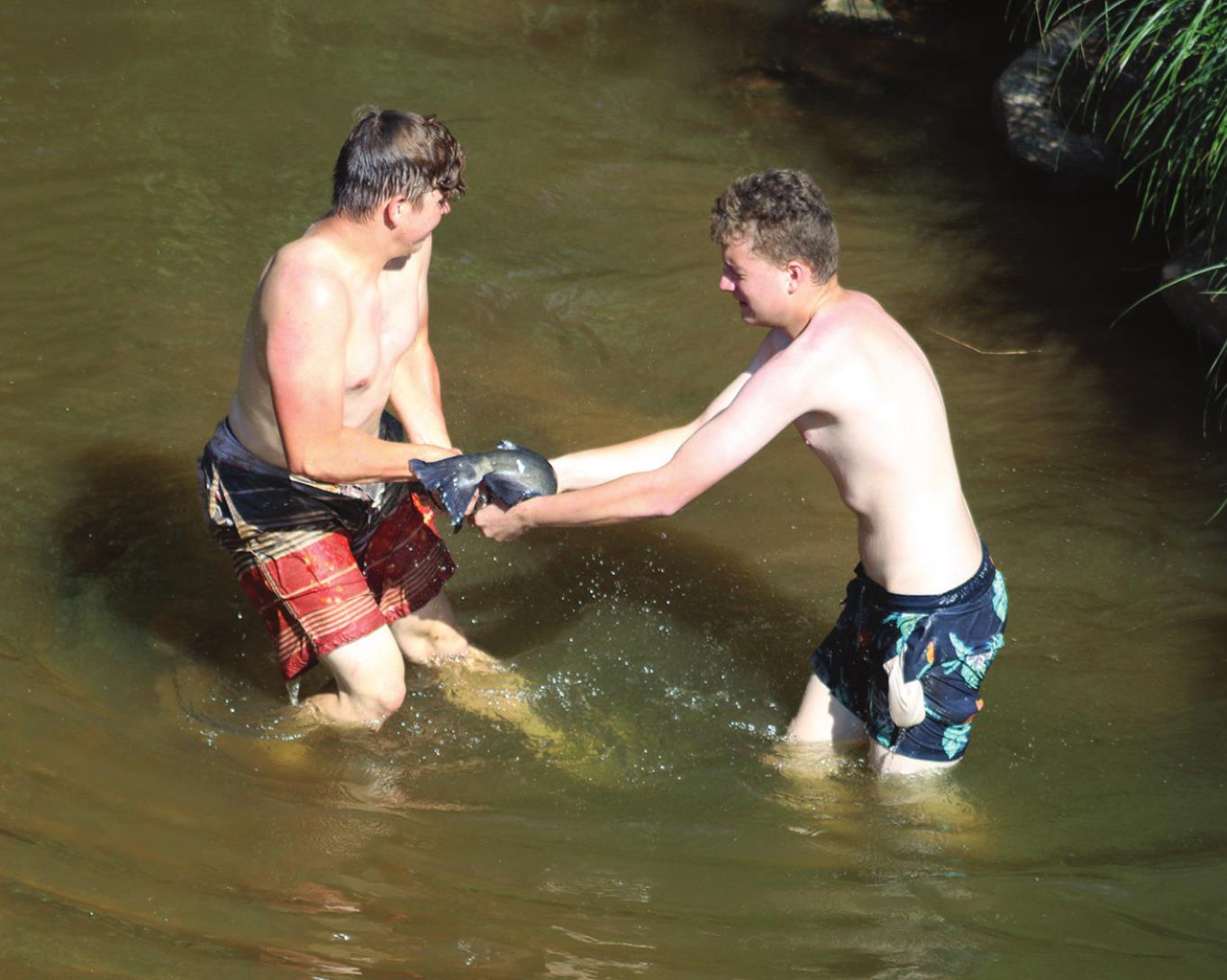
After exploring a few more empty holes, the intrepid noodlers stumbled on a pair of catfish inside a submerged tire. Ivy went in first, and managed to cradle one of the fish out of the tire. While he wrestled the first one out of the tire, the second made its escape.
“These fish are really spooky,” Henline said. “You stick your hand in a pile of rocks and they’re just there and they freak out. They don’t want you there. And if they’ve got babies they’ll attack your hand. All in all, it’s a pretty interesting way to fish.”
After a few more holes with no luck, the action shifted to a nearby creek where Ivy had previously discovered a few holes. After workig their way along the creek bank, the noodlers discovered another inhabited fish hole. After planning their strategy, Henline took the lead on retrieving the catfish, with Ivy working to block possible escape routes.
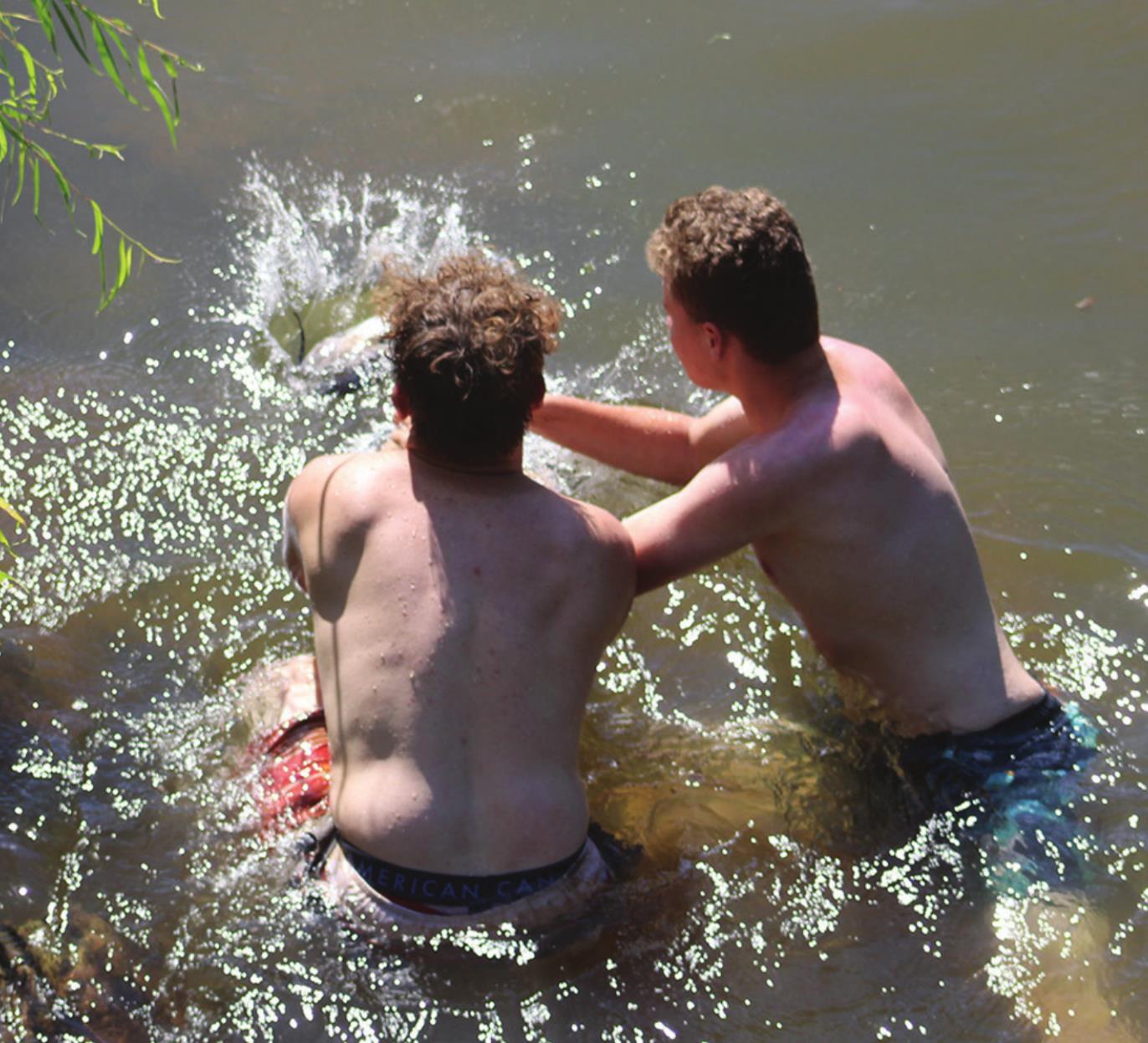
The careful planning looked like it would pay off, as Henline managed to pull the fish from the hole, But then, as he moved to fix his grip on the fish, it squirmed loose and splashed back into the water, making its escape.
Not content to call it a day after the one that got away, the pair continued to comb the creek bank for more holes. After a short time they found another fish, lazing in a hole away from the heat of the sun.
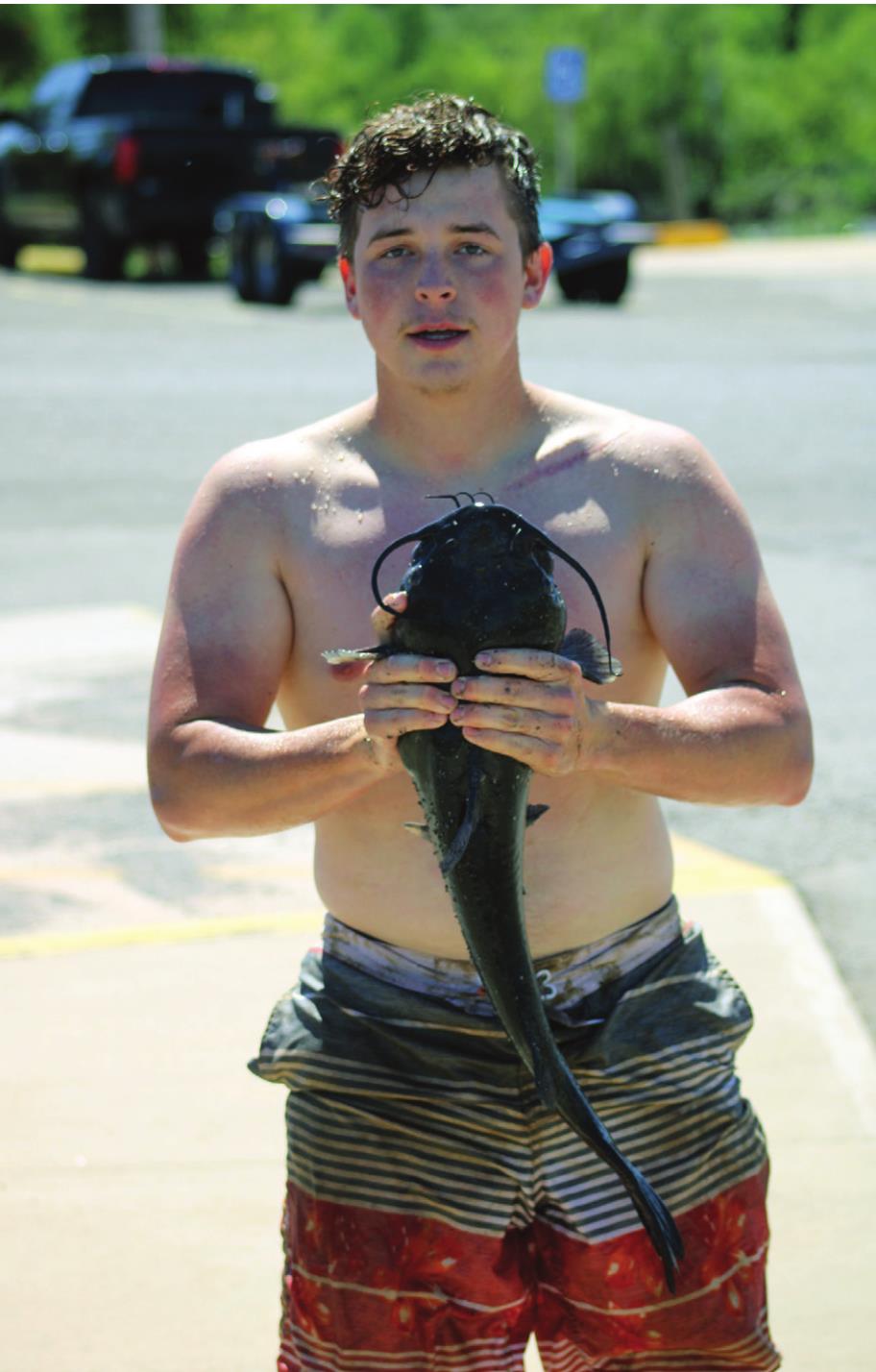
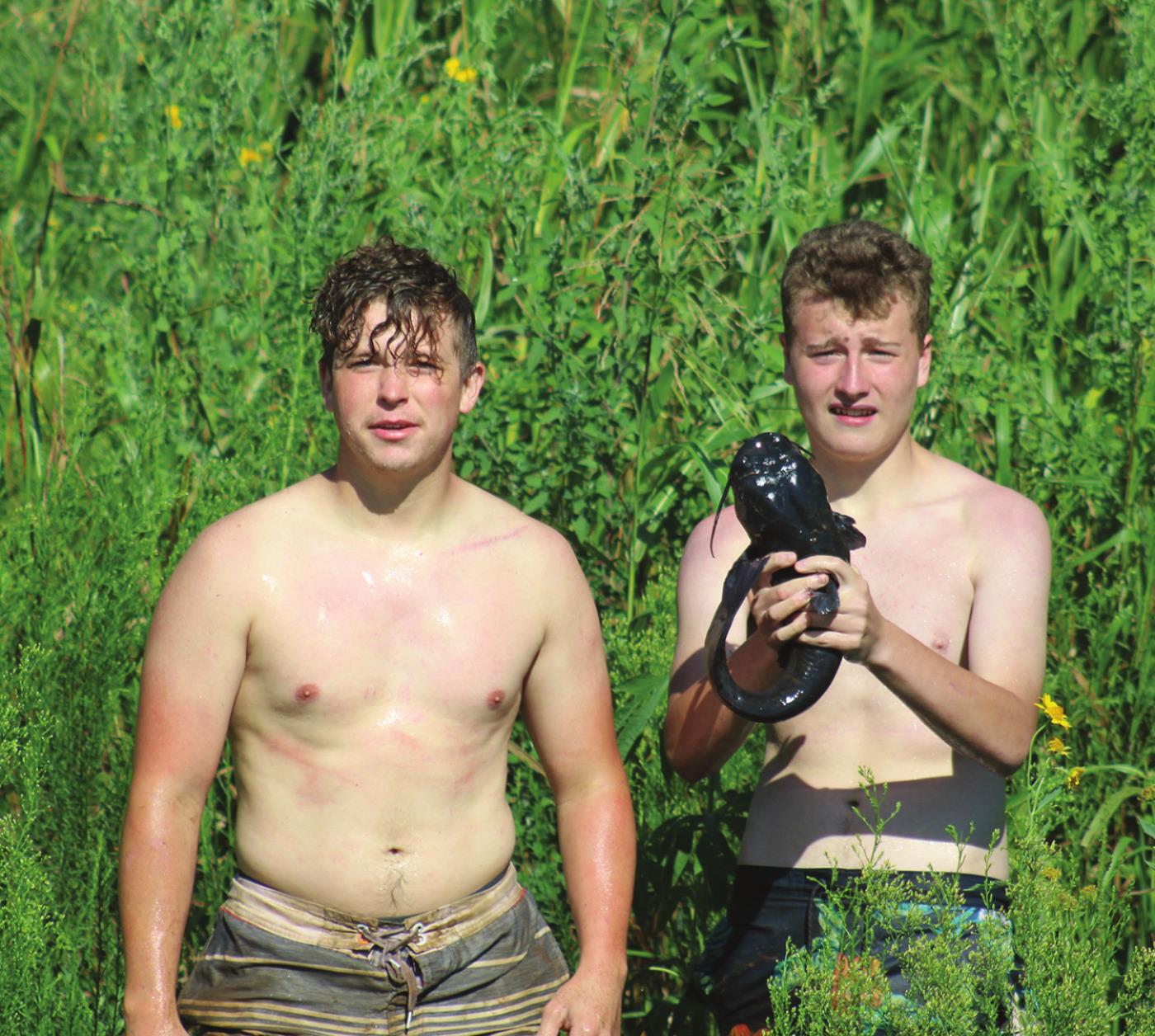
Ivy again surrendered the lead to his student angler who reached into the hole. After a bit of coaxing, Henline managed to grab the catfish by the mouth and pull it from the hole, where Ivy helped him secure his first-ever noodling catch.
The adventurous anglers decided to end the day on that high note and made their way back to Cordell, reliving the experience on the drive.
“It was a good experience,” Henline said. “I think people should learn about hunting and fishing because it’s good for conservation. It helps people learn about ecosystems and how different animals live in those ecosystems. Thanks, James. for teaching me how to noodle. It was fun.”
Ivy said it was a great experience, passing on his knowledge of noodling.
“I really enjoyed taking him to have his first noodling experience,” he said. “It kind of felt how I imagine my dad felt when he taught me.”