
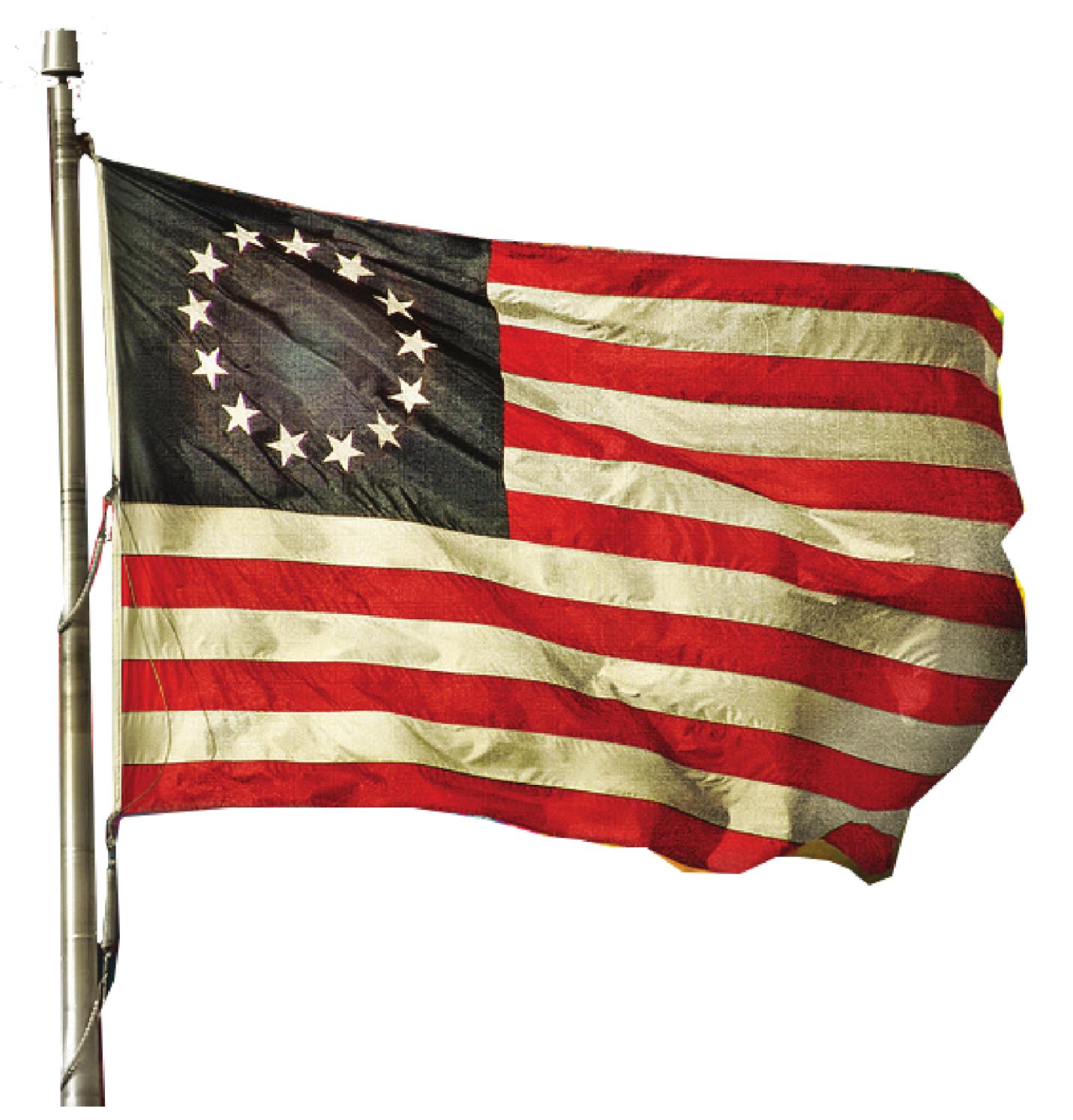
Contrary to public opinion and what is depicted in popular television and movies, Old Glory, even in its original 13-star form, wasn't the flag being carried by soldiers at the outbreak of the American Revolution. Most revolutionary regiments in the early stages of the war flew their own regimental flags, despite the Second Continental Congress voting in June 1775 to create the Continental Army as a unified fighting force.
It wasn't until nearly a full year after the signing of the Declaration of Independence, and two years after the creation of the Continental Army, that the original 13-star version of the American Flag, Old Glory, came into being. It was created on June 14, 1777, when the Second Continental Congress set aside work on the Articles of Confederation, forerunner to the United States Constitution, to establish the national flag. They passed a resolution proclaiming "the flag of the United States by be 1 3 stripes, alternate red or white," and adding that "the union be 1 3 stars, white in a blue field, representing a new constellation."
More than 100 years later, the idea for a national day to honor the flag was first brought to light. Bernard Cigrand, a school teacher in Wisconsin, suggested June 14 to be an annual holiday and celebrated across the country. He created the first Flag Day observance, leading his school in celebration of the flag. Thirty one years later, in 1916, President Woodrow Wilson officially established June 14 as Flag Day.
FLAG ETIQUETTE
American flag etiquette is established by the Flag Code, much of which has become lost to popular trends and practices.
The Flag Code calls for American flags to be illuminated by sunlight or another light source when on display. Flags can be flown at night, but according to the Flag Code, a dedicated light source should shine on the flag in the absence of sunlight.
Care should always be taken to prevent the flag from touching the ground. When being taken down, the flag should be properly folded and stored before being flown again, even if it's just for overnight storage. Strictly speaking, the Flag Code's prohibition on the flag touching the ground also prohibits the display of the flag on rugs or carpets.
In the same vein, the Flag Code stipulates that Old Glory should not appear on any decorative items, such as apparel or bedding.
When flying multiple flags on the same staff, such as state or municipal flags, the Stars and Stripes should always be at the peak of the flagstaff. When the flags of two or more nations are flown, they should always be on separate staffs and should be the same size and flown at the same height.
Another Flag Code violation that has attained popularity in recent years is the addition of other images or words to the flag. The Flag Code very strictly prohibits the addition of any drawing, insignia, or other mark to the flag, despite the popularity among some American politicians of signing copies of the flag for their supporters.
FLAG BURNING
The protest act of burning an American flag was cast into the public light during the Vietnam War era. In response to these protests, the Flag Protection Act of 1968 was enacted by Congress. In the 1980s the Supreme Court of the United States ruled that law unconstitutional, placing undue limitations on the free speech of American citizens.
Burning has always been a part of flag protocol. In fact, the respectful burning of a flag is the established protocol for retiring a damaged or worn flag that is unfit for public display.