
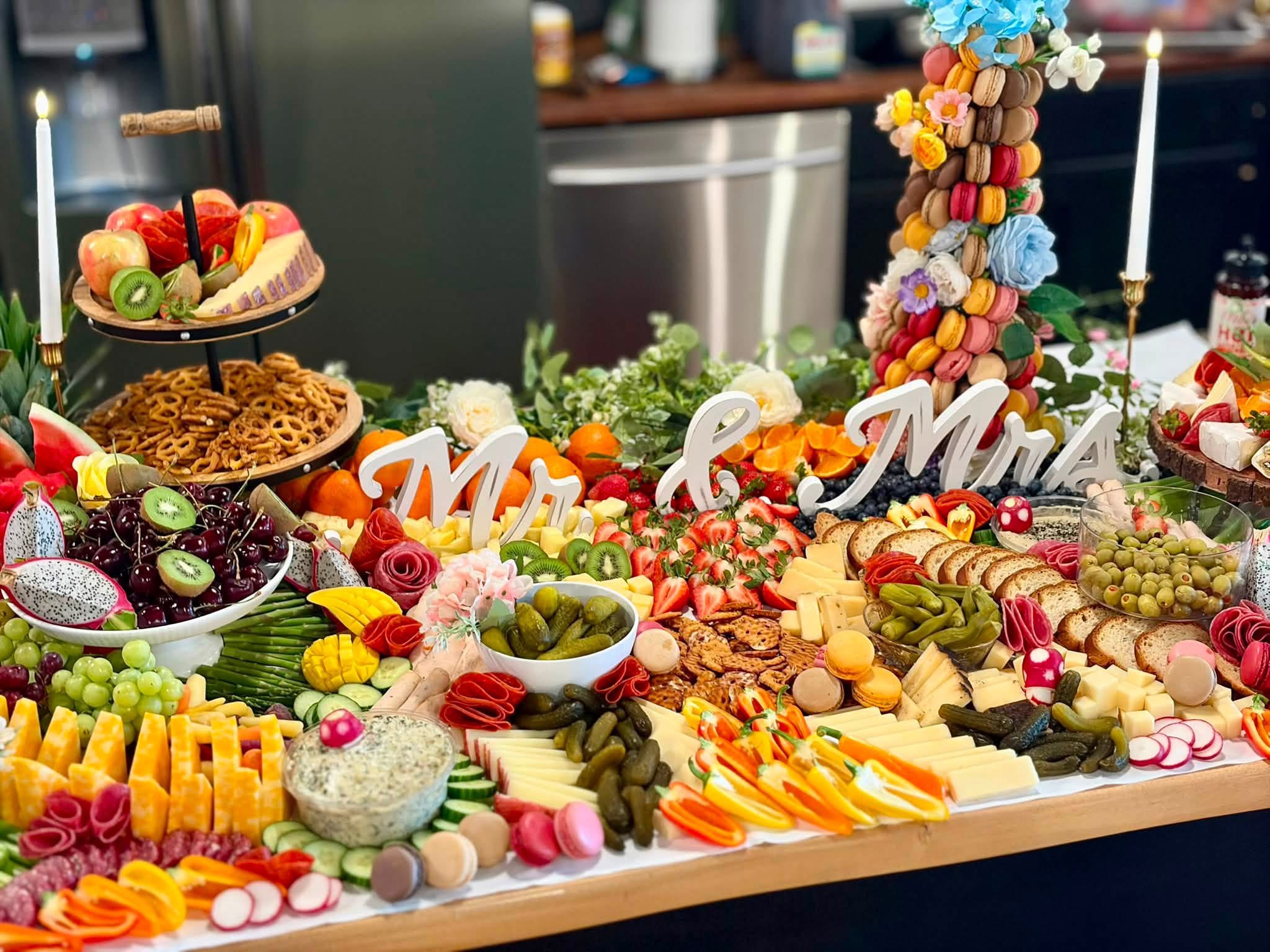
If Alex Thomison could put his journey on a plate, it would not be one perfectly composed entrée. It would be a charcuterie table.
If Alex Thomison could put his journey on a plate, it would not be one perfectly composed entrée. It would be a charcuterie table.
“It would definitely be some world cuisine for sure. I love bold colors, and I love bold flavors, and I love when you look at the food, and it’s just as pretty as it is delicious, and as far as a specific dish that’s really hard to say! I would say a charcuterie table! because you have a little bit of this, a little bit of that, just a whole bunch of different stuff and you get to dabble in everything!”
It is difficult to imagine a better description of Thomison himself. His story has a little bit of everything: Hamburger Helper and upscale lamb chops, wedding cakes and charcoal cinnamon rolls, restaurant kitchens and classrooms, a brightly colored mobile kitchen with someone else’s logo still painted on the side, long days, big dreams, hard lessons, an even bigger mustache, and ambition that stretches beyond anyone’s wildest dreams.
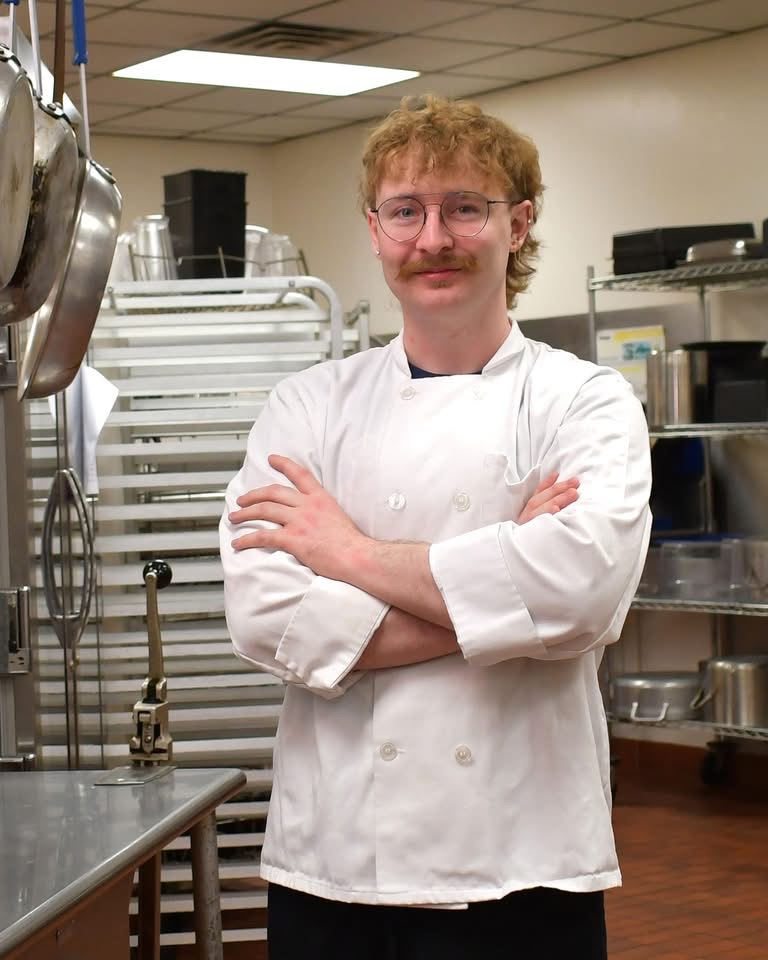
Today, Thomison is the culinary arts instructor at Western Technology Center, owner of Handlebars Mobile Kitchen and a familiar face behind the food at The Social in Clinton. But his culinary career did not begin with dreams of becoming a chef. It began because his family needed him, and adventure unfolded at 11 years old.
His mother was pregnant with twins and had been placed on bed rest. His stepfather at the time worked in the oil field, leaving young Alex to take on responsibilities most children his age probably hadn’t thought about.
“It really all just started from cooking for my family. My mom went on bed rest with her pregnancy when she was pregnant with twins. My stepdad worked in the oil field at the time, so it was just my mom, and she wasn’t really supposed to be getting out of bed much; she definitely was though,” he said, chuckling.
“But that is kinda where it all started. I took over a lot of the household responsibilities and duties: cooking, cleaning, laundry, dishes, and all the stuff.”
Back then, cooking was not an art form or a career path. It was simply something that needed to be done.
“Back in the day, I just viewed it as a part of what we had to do to survive. Like this was something that needed to be done; it had to be done. I just kind of naturally fell into that position. As it progressed, especially by the time that I reached high school, my mom probably never cooked dinner for our entire family again. It was always Alex for making dinner,” he recalled, laughing softly. “I just took over for her. I cooked, and she did the dishes, and it just worked like that. I really never honestly thought that it would have become as central to my life as it is, but it definitely has changed my life.”
And what culinary masterpiece launched that journey? Hamburger Helper.
“We ate Hamburger Helper for a long time because it was so simple.” And, for the record, it was good.
“Oh yeah! It turned out good! It was easy, and I was still going to school at the time, and it was simple, and manageable, and it was easy to clean up and still be able to work on everything else. Yep, I started with Hamburger Helper, reading the directions on the back of the box and just going with that.”
Food was already quietly weaving itself through Thomison’s life in other ways, too.
Some of his sweetest memories came from his grandmother, who decorated wedding cakes.
“My grandma,” Thomison said with a smile when asked how he became so talented at decorating cakes. “My great grandma, whenever I was growing up on the farm, she would decorate wedding cakes and stuff like that, and she would always trim the tops of the cakes, and I would get to decorate the top that she trimmed off.”
Those little scraps of cake became a place for a child to experiment, create, and spend time with someone he loved.
“Decorating cakes was just something she did for fun, and I always really enjoyed my time doing that with her, and I think that is kind of the reason I wanted to dabble in doing cakes and stuff, but now with where I’m at I’m trying to avoid doing cakes and desserts.”
For all the clues pointing toward a culinary future, however, young Alex had another career in mind. He initially dreamed of becoming a mailman.
“I wanted to be a mailman! I always wanted to be a mailman. My mom worked in the post office, and I always thought it was so cool! That was my biggest dream forever! All my elementary papers, all the way up to like seventh grade, still said “be a mailman when I grow up,” and it was just one of those things that I really wanted to do.”
When asked if retirement might one day lead him back to his childhood dream, his response was immediate.
“No. Hard no. It’s too hot out there!” expressed Thomison.
By high school, cooking had grown from household responsibility into something more. Thomison attended culinary classes at Western Technology Center, initially because he enjoyed cooking, wanted to develop friendships, and liked the idea of working in a big kitchen. However, his instructors saw something in him that he hadn’t quite seen in himself.
“My instructors at WTC when I was a student saw a lot of potential in me that I didn’t know at the time, and now that I’m on the other side of that, and in the instructor role, I can definitely see how they would have perceived me. I was eager to learn. They really pushed me to do my absolute best, and not just my instructors, but all of the staff out there really pushed me to do my best and to be my best.”
His career continued to develop through restaurant work, including multiple stints at Rio’s, a place he said he “absolutely loved.”
Then came a phone call. White Dog Hill, the upscale restaurant near Clinton, wanted to talk to him about a potential job opportunity. Thomison did not even know what White Dog Hill was at the time, although his mother did. When he finally told her about the opportunity, her reaction helped him understand just how important it could be.
“She went crazy! And she was like, “You have to do this! This is an opportunity to really start a career for you.’” For Thomison, seeing how much the opportunity meant to his mother helped make it a turning point. He was only around 17 when he began working there. He started in a lower position, was promoted within weeks, moved to another part of the kitchen, trained, learned, and eventually earned another promotion.
The teenager who had started by reading directions on the back of a Hamburger Helper box was suddenly working in an upscale kitchen where he was eventually given creative freedom to develop dishes.
“Honestly, I had the time of my life out there; I absolutely loved it.”
He also apparently took the job home with him, at least subconsciously. Thomison remembers being so immersed in the restaurant that his mother once tried to wake him for work while he was dreaming about chicken cooking on the grill. Still asleep, he began telling her how much longer the chicken needed to cook before it could go to a customer. White Dog Hill was fun, but it was also difficult. “It is definitely the environment where I learned the most. It was hard, incredibly difficult; I made mistakes left and right.”
Those mistakes mattered in an upscale restaurant, and the pressure forced him to learn quickly. It also taught him a lesson he continues to wrestle with today: ambition can carry a person far, but constantly running at full speed comes at a cost.
“The hardest lesson is just honestly trying to avoid burnout.”
Thomison admitted he has developed a tendency to give too much of himself to his work until there is not much left to give. This year, one of his biggest goals is not another business venture or another item to add to an already impressive résumé. It is to find the balance.
From the outside, Thomison’s path can look like one success leading neatly into another. He mentioned how social media can make life appear that way, but there is a much deeper story beneath the food photographs, awards, and accomplishments.
“I know a lot of my life is perceived off of social media and what people see on social media. A lot of people like to assume that I was given a lot, but there were periods of my life where I was homeless. My mom and I, whenever I was very, very young, we struggled more than people could imagine. When I was young, I didn’t realize the position that we were in, and now that I’ve gotten older, I look back and understand.”
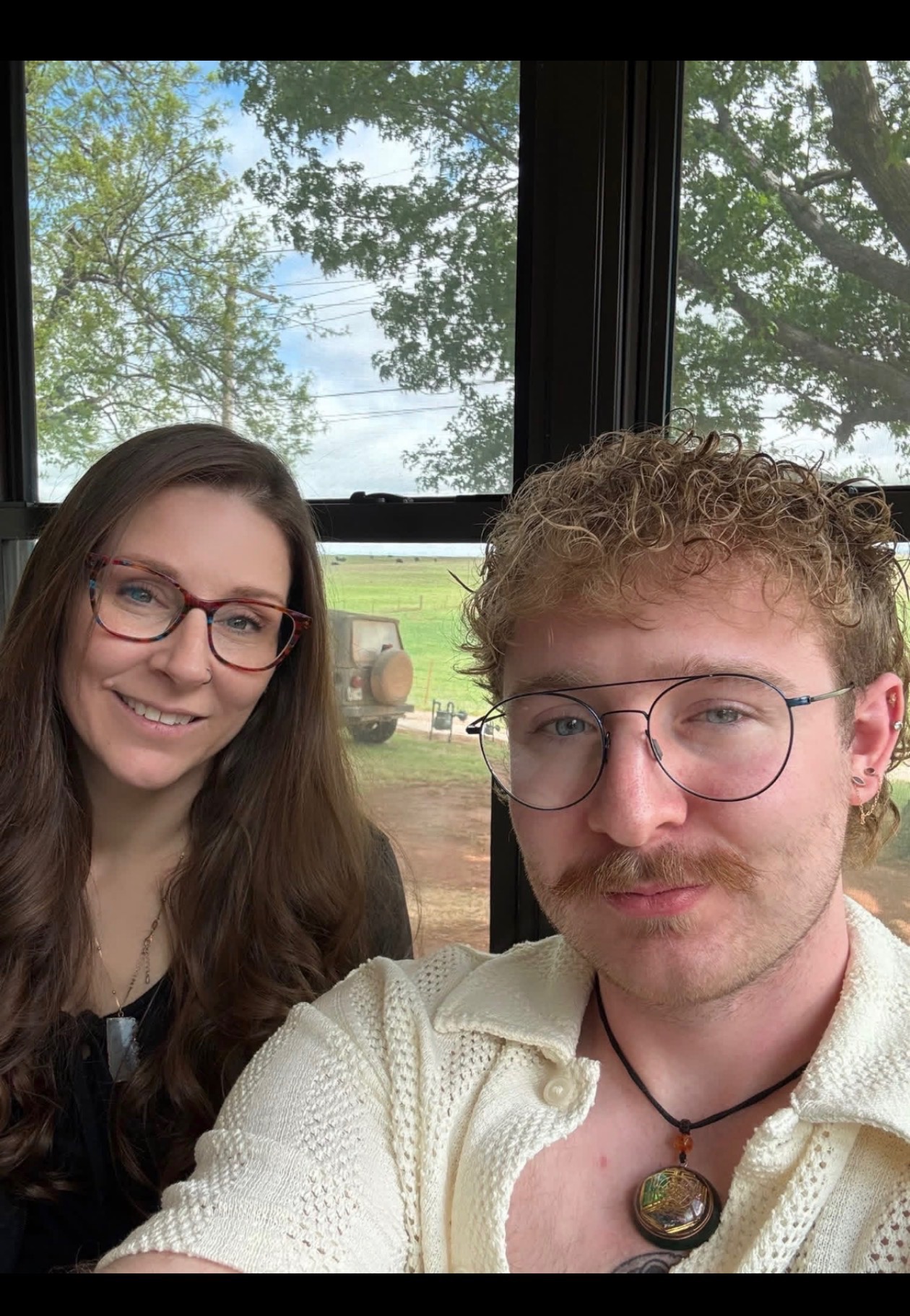
He credits much of the person he became to his mother, Alicia.
“I credit my mom for a lot of my success. She gave me some pretty strong core values that I still hold. Especially maintaining work ethic.”
Those experiences are now part of the message he carries into his classroom.
“I tell all my students, no matter what position you’re coming from, no matter what cards you’ve been dealt, you can make something of yourself as long as you’ve got the drive and the perseverance to maintain and keep up with everything and try and constantly build yourself.”
When asked who had the greatest influence on both the cook and the person he became, Thomison did not hesitate.
“My mother. Absolutely 100%.”
She supported him through band, cheer, color guard, academic team, robotics, and seemingly every other activity he could fit into his schedule.
“We went through many things that I hope most people will never have to, together, and I think that it made me really resilient.”
Growing up without much also helped shape Thomison’s attitude toward what he has now. To him, success is not necessarily about accumulating more.
“Obviously I would love to be wealthy one day, but at the end of the day, as long as I can pay my utility bills, my mortgage, my car payment, and I can live a comfortable lifestyle where I don’t necessarily have to worry about everything, and I’m happy and comfortable, then I don’t need to have more in my life.”
He has big goals. He wants to travel and to experience the world. He wants to keep taking the opportunities presented to him. And throughout his career, that is exactly what he has done.
“I took every opportunity I could, even when I knew it would burn me out. I still took those opportunities.”
Then there is Handlebars Mobile Kitchen. With a name like that, one might assume there’s an elaborate backstory, or at least a plot twist involving actual handlebars. The truth? It’s amusingly straightforward.
“My big ole mustache,” Thomison said, laughing.
“I really don’t even know how I thought of it,” he continued. “I think it’s such a clever way to brand. It’s almost so stupid that it’s funny and it’s a name you remember!”
And remember it, people do. The truck itself is almost as unmistakable as the name. The mobile kitchen is brightly colored and still sporting remnants of its former life as a taco truck. Thomison plans to have a local artist eventually redo the truck logo while keeping its colors, but for now there is something charming about the fact that the truck does not even need his name plastered across it. People see it and know.
“As soon as everyone sees it there, they’re like, “There’s Alex!”’ Thomison opened Handlebars’ window to the public around August 2025. And his first thought, one might wonder?
“Oh my gosh, it’s hot!”
He had never worked in a food truck before. There were lessons to learn about water, propane, generators, and the unfortunate reality that air conditioning can only do so much inside a small metal box filled with cooking equipment. Still, he loved it.
“I had the time of my life.” His opening menu featured hibachi because it was something different for the area. After that, the rules became considerably looser.
“Now, I just kind of do whatever I want, whenever I feel like it!”
Chicken fried steak, chicken strips, barbecue wings, Italian food, pasta, lasagna and Asian dishes have all found their way through the window.
“I always say it looks like a taco truck but very rarely are there ever any tacos coming out of it.”
That unpredictability is part of Handlebars’ and Thomison’s personalities. Many of the ingredients that go into those meals also come from close to home. Thomison estimated about 70 percent of the products he serves are made using items purchased from United in Cordell, while larger catering jobs may require ordering through U.S. Foods.
The support he receives from the community has turned Handlebars into far more than just an average food truck.
“I’m very thankful for how accepting the community is, especially of me. I’m very thankful for it; I’m very grateful. Even when I make mistakes, they still are very supportive of me and are willing to come back and always try the crazy new things that I’m trying to cook.”
The truck has become so busy with catering that opening regularly to the public can be difficult. Thomison said he is booked more than a year in advance and has catered numerous weddings from the truck. He does not see himself giving it up.
“I don’t think I ever could get rid of it,” he said.
Perhaps the most fitting part of Thomison’s story is that one of the places that helped him discover his potential eventually called him back. This time, not as a student, but as an educator.
“Looking back, I never would have expected that I would be the one in charge and I would be the instructor of the program. But it is quite crazy how full circle this all is.”
When the teaching opportunity arose at Western Technology Center, Thomison followed the same instinct that had guided much of his career. A door opened, and he walked through it.
“I really can’t tell you other than it just felt like it was a door that was opening and it felt like something that I should explore and something that I should at least attempt.”
Ironically, as a student, he could not wait to escape a school schedule and enter the world of working nights. Now?
“Looking back, I’m so thankful I am Monday through Friday now. I love the structure, I love the stability, I love knowing a year in advance exactly what days I’m working.”
Teaching presented an entirely different learning curve. At the start of his WTC career, beginning as an assistant, Thomison struggled to watch students make mistakes without jumping in to rescue them. Eventually, he realized something.
“They have to struggle. Whenever we struggle is when we grow and whenever we learn the most.”
It is a lesson that sounds remarkably similar to his own journey. Now, as head instructor, Thomison oversees a program with 31 students and three assistants. Enrollment is growing, and his excitement about the program is difficult to miss.
“Now I think that this year, I am definitely going to knock it out of the park. I am beyond excited; my enrollment is through the roof!”
And yes, when students cook, their instructor sometimes tastes the results. Sometimes.
“Depending on how much I trust them,” he remarked in laughter.
The students have opportunities to experiment and create their own recipes, which means results can vary.
“Sometimes they do phenomenal work, and sometimes they do not. They face a learning curve. Sometimes they go beyond expectations, and really impress me.”
Beyond temperatures, knife skills, recipes and culinary math, Thomison hopes his students learn something bigger.
“I really hope that they take from me that they can do anything that they want.”
Where some might warn young people not to aim too high, Thomison tells them the opposite.
“I encourage them to have high goals and hold themselves to a higher standard, not even just culinary but when they graduate and go on. I want to see them thrive.”
And he is already seeing evidence that they are. Former students have contacted him after graduation to share pictures of catering jobs, restaurant work and travels. One former student recently sent him a heartfelt message about the work she and friends were doing. For Thomison, those messages reveal an impact students may not recognize until after they leave his classroom.
The most rewarding part is what he calls “the lightbulb moment” when a student finally understands and succeeds using skills he helped teach.
“I think it’s amazing, honestly.”
His work as an educator has also earned recognition. Thomison was named the 2026 Family and Consumer Sciences New Teacher of the Year divisional winner and advanced among the top teachers considered for the state honor.
“I think it’s an amazing accomplishment to have even gotten that far, to have been recognized for that.”
But there may have been one perk of the award that fulfilled an even older dream.
“Ever since I was a little kid, I always wanted one of those big cardboard checks, and I finally got one of those big cardboard checks!”
Even with a more structured schedule, Thomison’s days can still be long.
On Thursdays and Fridays, he may begin around 6:30 a.m., teach at WTC until 4 p.m., drive to The Social in Clinton, work until around 9 p.m., clean until around 9:45 and arrive home around 10:30. Then he gets up the next day and does it again. So what does a professional chef cook when he finally gets home? Not much.
“Whatever is in the house is what I’m going to eat! If I don’t have leftovers from the social or something like that, it’s not uncommon to see me parked at Sonic getting some mozzarella sticks, because by the time I get home I do not wanna cook, I don’t wanna do the dishes, I just tap out at that point.”
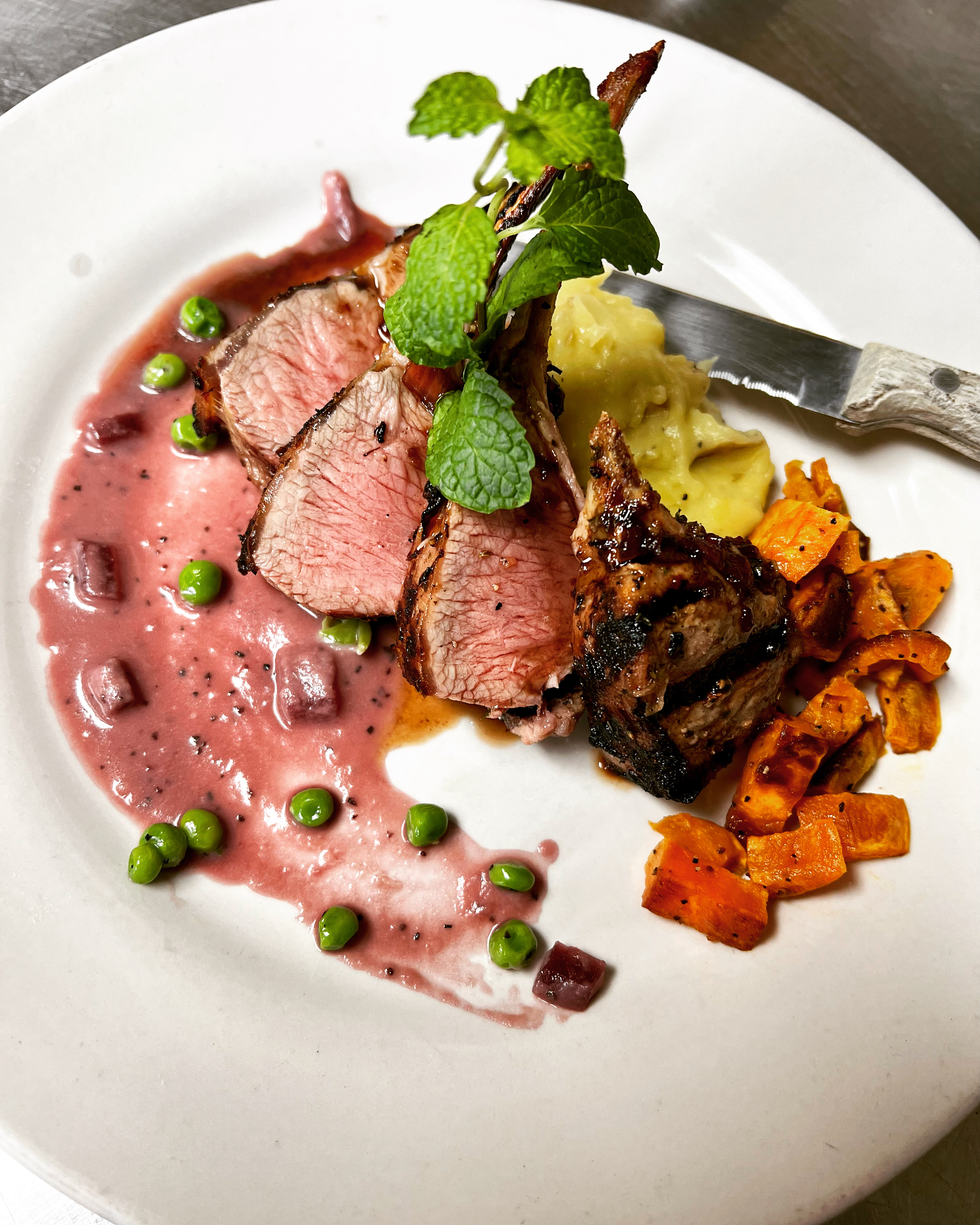
The man who can prepare elaborate catered dinners, teach culinary students and plate colorful lamb chops admits that “very minimal” cooking happens in his own home. But when food becomes an opportunity to serve someone else, that is different.
Handlebars has participated in local events and community efforts, including supporting the local fire department and helping with events such as the Wookies Back to School Bash. For Thomison, giving back is connected directly to where he came from.
“Small towns like this kind of survive off their community. Growing up, the community supported me astronomically.”
He remembers being the kid in band, cheer, and color guard who seemed to always have another school fundraiser. Community members bought what he sold and supported what he did. Now he’s able to return some of that support.
“Just over the years people have always supported me, and I really think it’s important to give back whenever I can.”
Food, he believes, is also about more than feeding someone.
He stated, “It develops relationships, in my opinion.”
“In a busy world where people do not always have time to stop and connect, a meal creates an excuse to gather.”
“I view it as building relationships, friendships, and getting to see each other because everyone is so busy. It almost reinforces that there is such a strong community here.”
Then Thomison offered one of the simplest explanations for why serving people matters.
“You never know if you’re the highlight of someone’s day.”
For someone who has accomplished a great deal at a relatively young age, Thomison talks surprisingly often about mistakes. Not with embarrassment, but with acceptance. There was the four-tier wedding cake he attempted around the age of 17 for an outdoor Oklahoma wedding in June. Heat and wedding cake did not go hand in hand. The cake would not stay standing.
“That one was rough,” he said. “I was so distraught over my failure.”
Today, he wishes he could go back and talk to that 17-year-old.
“I wish I could tell myself at that moment that it’s fine; was the customer happy? Absolutely not, but you were just a kid trying to learn.”
Then there were the cinnamon rolls. Thomison was still living with his mother, juggling school, vo-tech, two full-time jobs, cheer, band and everything else he had managed to squeeze into his schedule, when a close friend ordered four dozen cinnamon rolls. Thomison made them, let them rise, shaped them, and finally put them into the oven around 9:15 one night. Then he made a decision many exhausted people have made before him.
“I told myself I’m gonna take a little nap while they bake…” The little nap ended around 7:45 the next morning. The oven was still on. The house was filled with smoke. The cinnamon rolls were no longer cinnamon rolls.
“They were charcoal. like literal charcoal rocks.”
His mother thought the whole thing was hilarious. Thomison, less so. He sent his friend a photograph and said, “I don’t think I can deliver your cinnamon rolls today.”
And because every good story deserves a twist, that was apparently not the last time.
“I’ve done that about four or five times in my life… fell asleep while I was baking… then just charcoal,” he laughed.
Behind the humor, though, is the same lesson Thomison now tries to give his students. You will mess up. You will learn. And life will keep moving.
If he could sit across from the 11-year-old Alex making Hamburger Helper, the teenager sweating through restaurant shifts or the 17-year-old staring in horror at a collapsing wedding cake, Thomison knows what he would say.
“You’re going to make mistakes, and it’s going to be okay. You’re going to make more mistakes than you could ever imagine, and it’s going to be okay. Don’t give up, stick it through.”
Perhaps that is the thread tying together all the seemingly mismatched pieces of Thomison’s charcuterie- table life. He kept showing up. He kept saying yes. He kept cooking. He kept making mistakes. And he kept learning.
The boy who once cooked because his family needed dinner eventually discovered that food could be a career. The student whose instructors saw potential in him eventually became the instructor looking for potential in someone else. The child whose family was helped by others’ generosity grew into a business owner seeking opportunities to give back.
And even after everything he has learned, Thomison does not pretend he has life completely figured out. Maybe nobody does.
“Every day is still a first day for me, and it’s the same for everyone. We’re all experiencing life for the first time, some of us are just in a further stage, and some of us are just getting started.”
For Thomison, there is still plenty left to cook, teach, build, see, and undoubtedly mess up along the way. After all, the charcuterie table is not yet finished.