
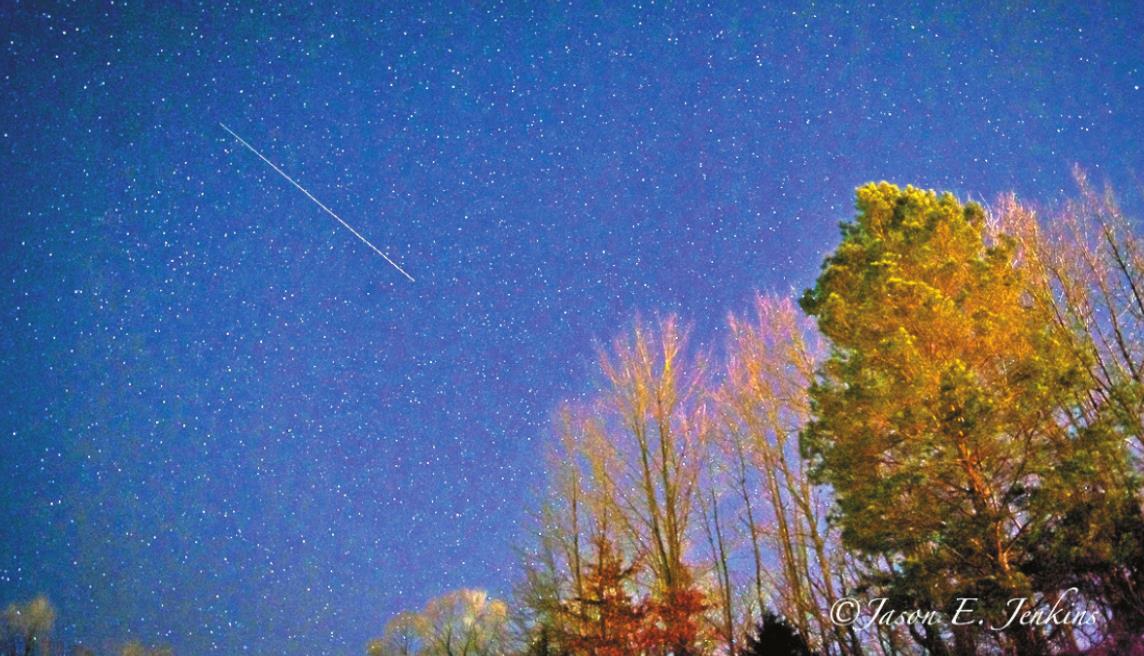
November has flown by and December is here.
For those of us north of the equator, our days will continue to shorten (and nights lengthen) until the solstice on Dec.21.
For those in the southern hemisphere just the opposite is happening: days are getting longer and warmer.
With the shorter days and longer nights our time available for stargazing or meteor watching is greater.
In addition to our winter solstice, there are two decent meteor showers in December.
The first, the Geminid Meteor Shower starts from about Dec. 4-16. It peaks with about 100 meteors an hour around December 12-14th.
This is at the time of the new moon, so there will be very little moonlight to wash out the Geminid meteors.
The other meteor shower is the Ursid, which is active from Dec. 17-26.
These meteors are less frequent (5-15 per hour). They seem to originate out of the Little Dipper (Ursa Minor) for which they’re named.
Viewing for the Ursids will be more challenging as the moon will be half full.
Waiting until after moonset (near midnight) or just before dawn will assist in finding these very faint meteors.
On Dec. 29 we have the last full moon of the year. The December full moon is called the Cold full moon.