
“Ask not what your church can do for you-- ask what you can do for your church.” (paraphrasing Pres. Kennedy, 1961) What can we do for our church? We could be like Stephanas—but who was he?
As the Apostle Paul travelled across southern Europe starting churches, he kept in contact with those churches by letters which are preserved in the New Testament. As we read his letters, we see that he mentioned individuals in each church whom he acknowledged for their service. In the first letter to the church in Corinth we read about one individual whom Paul acknowledged for exemplary service in the church. His name was Stephanas (1 Corinthians 16:15-16).
I admit that though I have read the book of 1 Corinthians many times, I don’t remember reading about Stephanas. Probably I skipped over him because I didn’t consider him to be very important: he wasn’t listed as a leader or teacher. But Paul remembered this man and his family because they worked hard at “serving the saints”—but Paul didn’t explain what that meant. Maybe they allowed the church to meet in their house. Maybe they cleaned up after meetings. Maybe they were go-fers, running errands for the leaders. Maybe they visited the sick, or supplied the needs of the poor, or did home fix-it chores for fellow Christians. Possibly they did several of these tasks—we don’t know for sure. But what we do know is that Paul urged other members of the church in Corinth to follow their example. I expect that every local church is blessed to have members like Stephanas who may never be up-front, but are always serving others in the background. Christ is the head of the church; they are the backbone! What is a church? It is not a building. It is a gathering of believers which fulfils two social needs: our need for fellowship and our need for cooperation, working together to fulfil the purpose given us by God. And the church trains us in how to serve others and then sends us to serve the world in Jesus’ name. Church leaders are given the primary task of training church members in how to serve: “Christ gave the apostles, the prophets, the evangelists, the pastors and teachers, to equip his people for works of service…” (Ephesians 4:11-12), in other words, the leaders equip members like Stephanas to serve! Notice that serving the church is not the leaders’ task, it is the laymen’s task!
Three biblical metaphors for the church are family, body, and bride. The church is a family: God is our Father—we can call him abba, a familiar term for father in biblical times—and Jesus is our older brother. Believers are all brothers and sisters adopted into God’s family. As siblings we care for each other, build each other up, and serve each other in love.
The church is a body with Christ as the head and each member does a distinct function within the body’s life. Paul described us like this: “For just as each of us has one body with many members, and those members do not all have the same function, so in Christ we, though many, form one body, and each member belongs to all the others” (Romans 12:4-5). “There are different kinds of service, but the same Lord. There are different kinds of working, but in all of them and in everyone it is the same God at work. Now to each one the manifestation of the Spirit is given for the common good.” (1 Corinthians 12:5-7).
In other words, each member of the body of Christ is given a particular gift—we call them spiritual gifts—empowered by the Holy Spirit. There are different lists of these gifts, particularly 1 Corinthians 12:8-11 and Romans 12:6-8, where 16 different gifts are listed: ranging from speaking wisdom to interpreting tongues, and from leadership to service and mercy. The main point of these different lists is that every believer has a gift, and that the gifts are not the same—thus Christians are not the same—and it is the Spirit who decides who receives which gift. And the purpose of these gifts is the common good—the purpose of spiritual gifts is not to create superstars but super-servants.
Paul concludes the whole lesson about spiritual gifts by naming the single attribute which unifies and surpasses them all: love (1 Corinthians 13). “By love serve one another” (Galatians 5:13). That is how we, like Stephanas and his family, can serve the church.
Finally, the church is a bride devoted to our bridegroom Jesus. We await his coming with great anticipation, keeping ourselves pure until the wedding feast (2 Corinthians 11:2-3; Revelation 19:7-8). Since the bride does not know when the bridegroom will come, she must always be ready.
I began this week’s column with a statement which I now want to retract: We should ask what our church can do for us. As believers we need the church and its ministries. Our relationship with our local church is mutual: we serve it, it serves us. It guides us in worship, in prayer, in teaching, in evangelism, in encouragement, and in preparation for serving others. We each need the local gathering of saints, and it needs each of us.
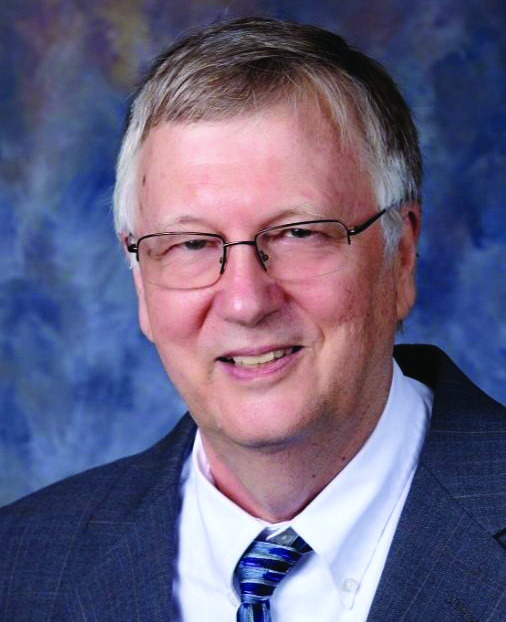
Greg Giles is a published author, who, along with his wife Jean, has embraced the call to serve and teach around the globe. Their life together has included missionary work in Liberia, Bangladesh, teaching in China, and raising a family in Bemidji, Minnesota. Between global travels and local commitments, including serving as superintendent of Corn Bible Academy and their current part-time roles at Corn Heritage Village, the Gileses have found “home” in many places; yet, they now happily reside in retirement in Cordell. Please visit his website at reflections-on-wisdom.com.