

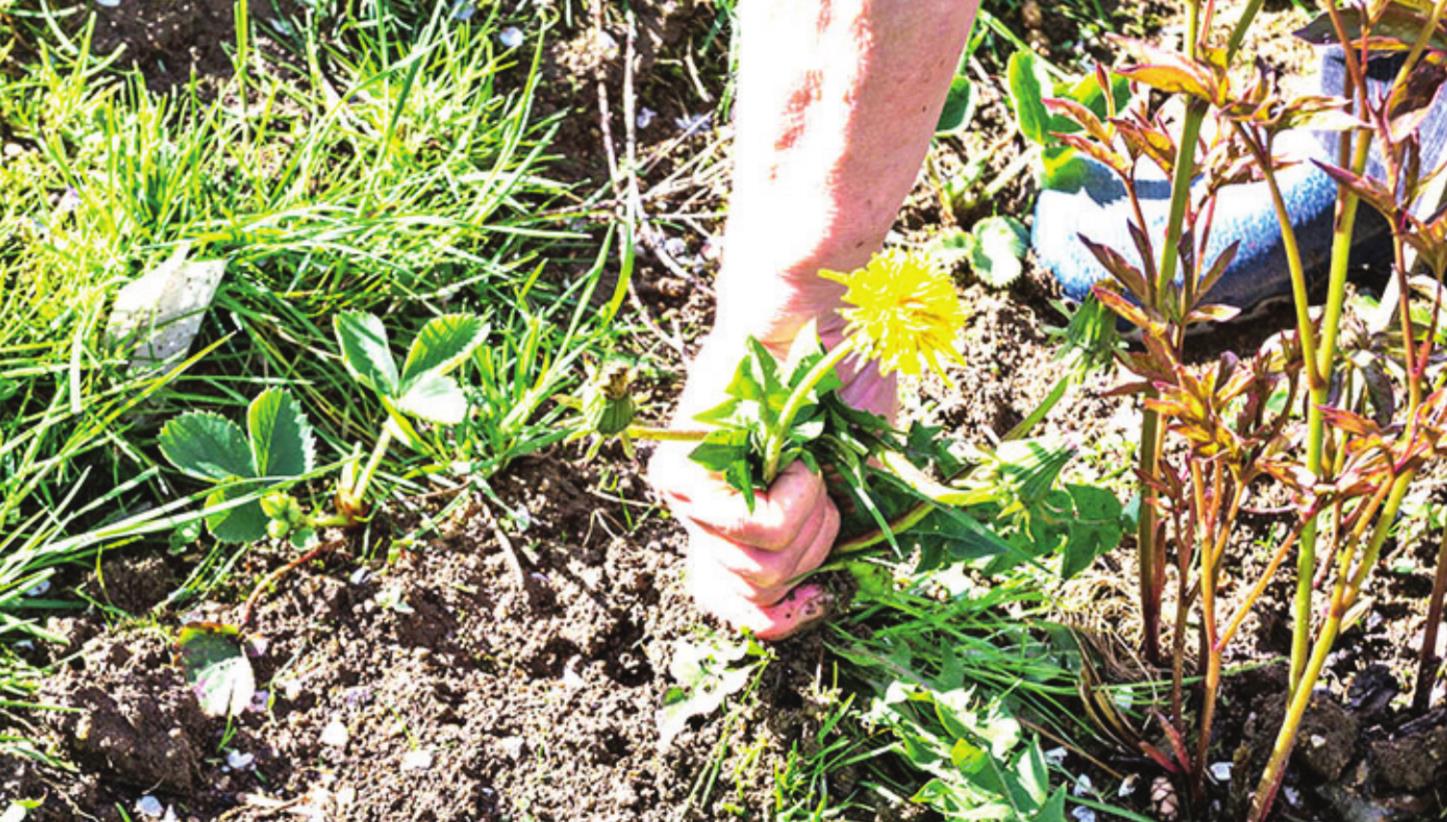
The battle of weeds hasn’t just been between me and the weeds this year, it has been between me and my husband Chris. In previous years, I would run to the local hardware or farm supply store and grab the chemicals that I needed to kill the weeds. But all that has changed this year. At the start of the year, we decided to go completely organic so we could safely invite more nature to our yard. This is why we began composting and finding natural remedies to control pests in our greenhouse. I am no stranger to pulling weeds, but sometimes chemicals would help clear weeds out from areas that were not planted heavily. I like my gardens to be full of beautiful plants or vegetables, not unsightly weeds.
My opinion of weeds is probably the same as most gardeners. They are invasive, rob nutrients and sunlight from my plants and can make a mess of things in short periods of time. But on the other hand, Chris’s idea of weeds is that they can be beneficial for the soil. He has found several types of weeds that add nutrients to the soil and some that remove bad elements from the soil. Weeds can also serve as a living mulch to protect the garden soil and their roots can help prevent wind and rain induced soil erosion. Their roots aerate the soil and can increase the natural habitat for earthworms. Their flowers attract pol linators to their sweet nectar.
I put his theory to the test last week when he went away for a couple of days to help on a construction site. Since he was not at home to tell me to get out of his garden area, I snuck in and pulled all of the weeds I could get out before he arrived back from the job. I pushed myself harder than normal so I could get as much accomplished before he came home to see his weedless gardens. He was not proud of my accomplishment though, he seemed disappointed instead.
I will now admit one week later, I think he was correct. See, I assumed that his lack of removing the weeds was more about laziness and he was using it as an excuse not to bust his back removing them. But since removing them, I have noticed some very immediate repercussions. The areas of the garden that I pulled began drying up immediately. I had taken the soil’s shade away when removing the weeds. Unfortunately, I am back to watering every other day compared to once every 4-6 days. The grasshoppers have invaded the garden plants. Prior to removing the weeds, the grasshoppers were happy eating the leaves from the weeds. Since I removed their food source, they are now eating the food intended for my own family. I also created a muddy river in between the garden beds and around the walkways since I removed the soil supports from the outer edges of the beds. And last but not least, some of his cool weather vege tables that were thriving in July are now beginning to wilt because I removed the weeds.
His yard does indeed look better after pulling the unsightly weeds, in my opinion. However, the plants and the soil are not as healthy now due to my obsessive and stubborn ways. Point proven! I apologize to Chris and admit he may have been correct. Now, I am not saying that I will let weeds grow in my flower beds but I will step back and let him grow weeds throughout his vegetable beds without any further interference from myself.
Here are a few weeds that I struggle with in my gardens that have some benefits worth noting:
Dandelions have deep-seated roots that accumulate minerals such as potassium, phosphorus, calcium, copper, iron, magnesium, and silicon. Roots aerate soil. Attracts ladybugs, wasps and lacewings.
Chickweed grows in soil that lacks calcium or phosphorus or that has and abundant supply of potassium or sodium in it. Medicinal weed-reduces inflammation, fights germs and promotes wound healing.
Broadleaf Plantain accumulates calcium, magnesium, manganese, iron, and silicon. Medicinal weed-can reduce pain and itching from bug bites.
White Clover transfers nitrogen into the soil and accumulates phosphorus. Attracts ladybugs and other pollinators.
Ragweed can help remove toxic heavy metals like lead from the soil. The plants can help clear up industrial waste and improve the soil. Seeds are edible and leaves can be crushed to create an astringent for bug bites and rashes.
Pigweed, aka Careless Weed, aka Wild Amaranth are grown in multiple countries as an edible vegetable. Leaves, seeds, and stalks are edible and flavorful.
Horseweed leaves and roots have medicinal uses that can aid dysentery, hemorrhoids, bladder issues, and many other ailments.
Nettles are rich in vitamins A, B2, C, D, and K and have important nutrients like antioxidants, amino acids, and chlorophyll. They’re also a good source of calcium, potassium, iodine, manganese, and especially iron.
Charla Ingram is a plant, nature, and golfing enthusiast who, along with her husband Chris, owns and operates C&C Gardens in the small town of Bessie, Oklahoma.