
The flip side of that proverb is also true: No one is born foolish!
Somewhere between birth and old age, we all make choices which lead us into becoming wise or foolish. So how can we become wise?
The Old Testament gives us a case study in acquiring wisdom. Young King Solomon had a dream in which God offered him anything he wanted. He might have asked for riches, honor, and a long life, but instead he requested wisdom. “I am very young and don’t know how to rule.” “So give me the wisdom I need to rule your people with justice and to know the difference between good and evil. Otherwise, how will I ever be able to rule this great people of yours.” (1 Kings 3:7,9 Good News Bible).
Notice three parts of Solomon’s request: 1. An admission that he was not yet wise, 2. A request to learn to distinguish right from wrong, 3. A desire to understand how to make wise decisions in order to rule effectively.
These three parts are a model for all of us on how to seek wisdom.
Step One: Acknowledge that we are not yet wise. Real wisdom begins with humility. This is not false humility, it is simple honesty: we all start life without wisdom. Proverbs refers to youth as “simple,” meaning inexperienced, naïve, lacking wisdom. That is our starting point, but it doesn’t have to be our ending point. Throughout life, we should all continue learning wisdom.
On the other hand, the mark of a fool is to believe that one is already wise and not needing further instruction. To be wise in one’s own eyes is the beginning of foolishness!
Step Two: Learning right from wrong. In the Garden of Eden, Eve wanted the knowledge of good and evil. However, when she disobeyed the only rule that God had given, she lost her path to wisdom, and her understanding of right and wrong turned into moral confusion. As her children, her confusion still describes us today. Like Solomon, we need wisdom to distinguish right from wrong.
In his request Solomon recognized that wisdom and righteousness are partners. One cannot become wise without moral understanding. And he came to understand right and wrong as more than a set of rules to be obeyed but as principles of righteous living based on God’s character. Solomon wrote in Proverbs that wisdom consists of treating one another with honesty, fairness, and kindness.
Step Three: Ask God to give you wisdom.
Solomon asked that he might learn to make wise decisions in order to become an effective ruler. The best-known example of his decision-making was the incident of two women who both claimed to be the mother of one infant son. They had each given birth to a son but when one of the babies died, they both claimed the living one as their own. Nowadays a DNA test would have resolved the matter easily, but without that Solomon used a maternal-love test. He ordered the baby to be cut in half and each mother to be given one half. One woman agreed to this deal but the other said “Don’t kill him. Let her take him.” Based on his understanding of human nature, Solomon recognized that her loving response was that of the actual mother (1 Kings 3:16–28).
Hopefully, none of us will ever face such a life-or-death decision as in this story, but in every life there will be thousands of difficult decisions to make. We will need wisdom to face those decisions. Like Solomon we can ask God for wisdom— and we don’t need to wait for a dream to prompt us to make that request. We should ask God for wisdom because he has promised to give it to those who ask in faith (James 1:5-8).
As Solomon wrote in the book of Proverbs, wisdom is available for all mankind. Therefore, we should all “get wisdom.” (Proverbs 4:5; 8:4-5).
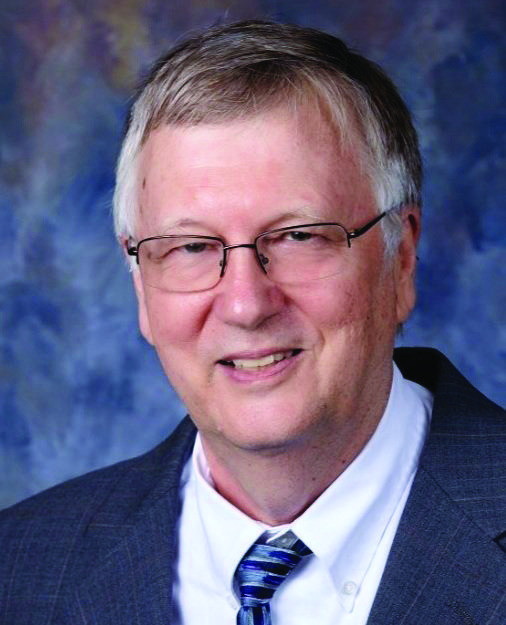
Greg Giles is a published author, who, along with his wife Jean, has embraced the call to serve and teach around the globe. Their life together has included missionary work in Liberia, teaching in China, and raising a family in Bemidji, Minnesota. Between global travels and local commitments, including serving as superintendent of Corn Bible Academy and their current part-time roles at Corn Heritage Village, the Gileses have found “home” in many places; yet, they now happily reside in retirement in Cordell.